OSX4007 aquaculture technical report, MSc Marine Biology, Bangor University. April 2018.
Preface
This was coursework for a module on marine invertebrate biology and culture. The brief asked us to specify a hatchery for a crustacean or mollusc species in 3,000 words, and to be quantitative about it: pick a production target, say what stage the animals leave at, size the tanks to match, and draw a flow chart carrying the numbers through each stage. Site selection and water treatment as well. The example target we were given was ten million postlarvae a month.
I wrote about a horseshoe crab, which is neither a crustacean nor a mollusc. It is a chelicerate, closer to spiders than to anything with a shell. I asked the professor first and he was happy with it.
It is an odd animal to build a hatchery for. They take nine or ten years to reach maturity, so raising them to a size anyone would pay for is hopeless. That rules out ordinary aquaculture and leaves stock enhancement: hatch a lot of eggs, get the juveniles through the early instars where almost all of them would otherwise die, and put them back on the beach.
So rather than invent a production target I used a real one. The bait fishery took about 89,000 adults out of Long Island Sound in 2013. The facility is sized to put that many back.
I enjoyed this more than anything else I did that year. It got an A.
Part 1 – The horseshoe crab
1.1 Classification and global distribution
Horseshoe crabs are marine arthropods of the Limulidae family. Estimates suggest extant species of this family have persisted in their present form for 200-450 million years, and are the closest living relatives of the trilobites (Walls, Berkson, & Smith, 2002). For this reason, they are often referred to as “living fossils”. Despite their name, horseshoe crabs are not crustaceans, but rather are more closely related to arachnids in the subphylum Chelicerata (S. A. Smith & Berkson, 2005). There are four living species of horseshoe crab found in two regions of the globe. The American horseshoe crab Limulus polyphemus, occupies the Atlantic coastline of North America, and the three species Tachypleus gigas, T. tridentatus, and Carcinoscorpius rotundicauda are found across Asia (Figure. 1) (Carmichael & Brush, 2012).
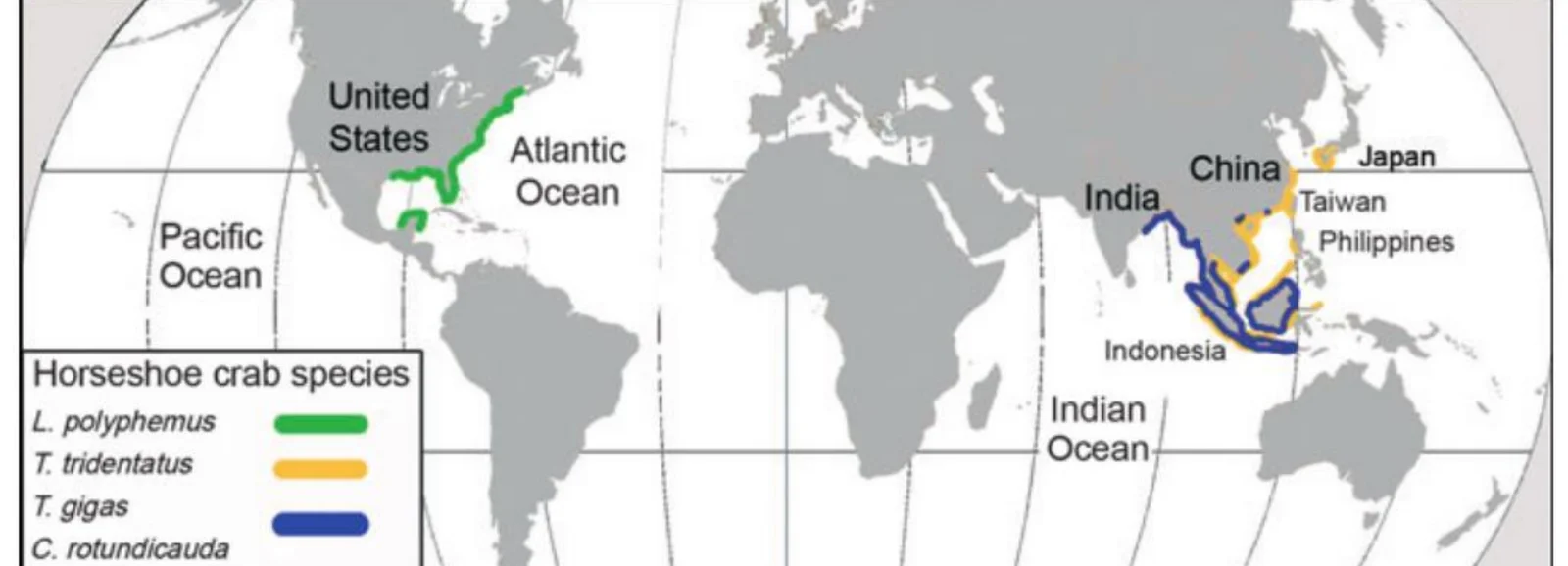
Figure 1. Estimated global distribution of the four living species of horseshoe crab. Data for T. gigas and C. rotundicauda are combined due to the extensive distributional overlap of these species (Carmichael & Brush, 2012).
The majority of past research on horseshoe crab biology and aquaculture have been on the American horseshoe crab species L. polyphemus, therefore this report will predominantly focus on this species unless otherwise stated.
1.2 General life history and reproductive biology
American horseshoe crabs are long-lived compared to most other invertebrates; with a maximum lifespan of 17 – 19 years (Smith, Millard, & Carmichael, 2009). They are slow to mature, with males reaching sexual maturity at 9 years, and females at 10 years of age.
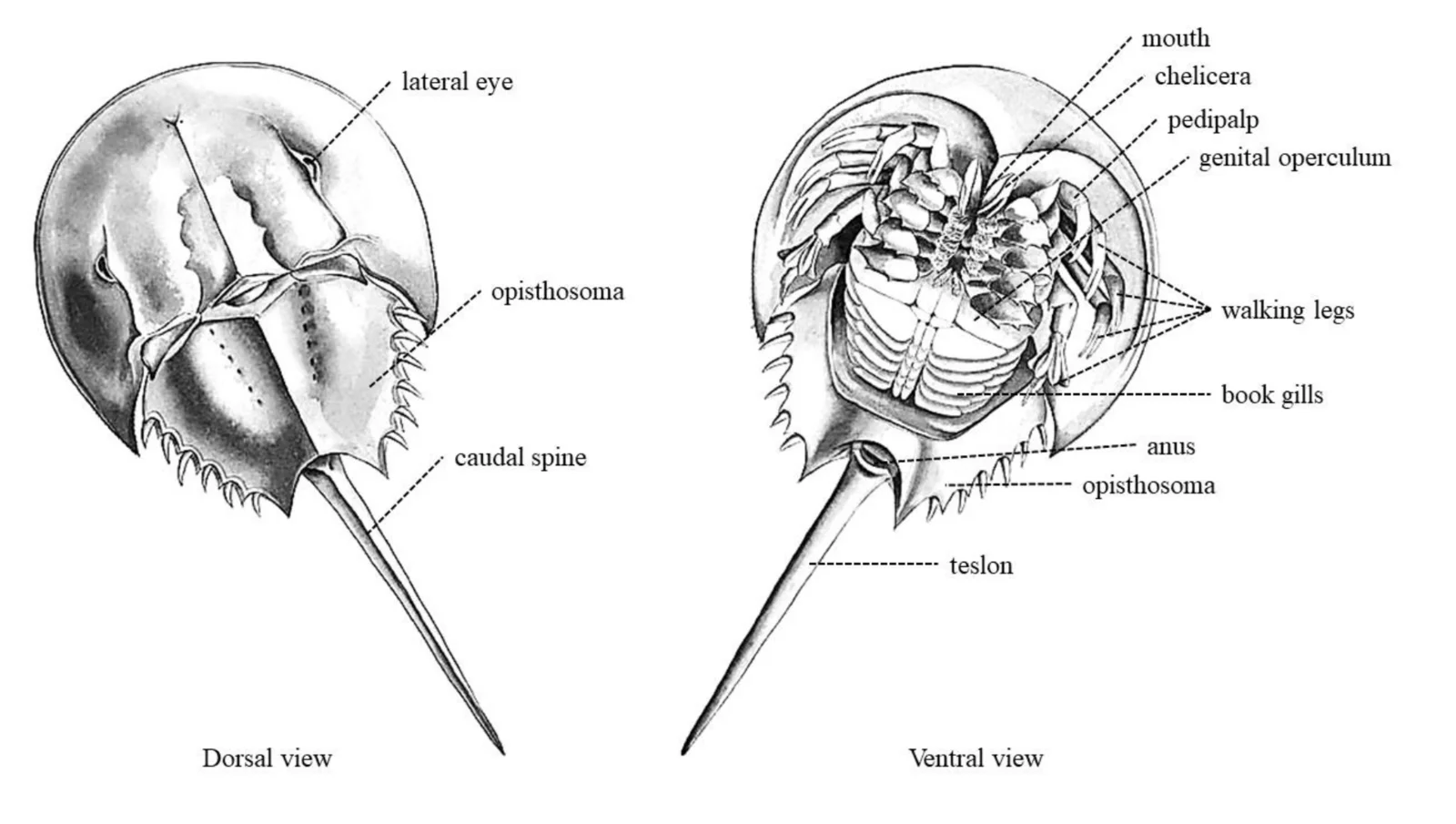
Figure 2. External anatomy of the American horseshoe crab Limulus polyphemus. Adapted from various online sources.
Adults spend the winter months in deeper waters on the continental shelf, and have been found at depths of approximately 66 m up to 56 km off the coast (Shuster & Babcock, 2014). Increasing water temperatures and daylight length stimulate adult migration to sandy intertidal beaches to spawn. Peak spawning activity occurs in late spring between the months of March and June (Smith et al., 2002). During spawning season, thousands of adults congregate on the sandy beaches, with males “patrolling” the shoreline ready to grasp the females heading for the beach (Shuster & Babcock, 2014). The males attach to the posterior margin of the female’s opisthosoma (abdomen) using modified claw-like front pedipalps (“clasper” legs) (Figure 2) (Brockmann & Penn, 1992). Most of the females that reach the shore have a male attached to them, with several other males following close behind (Figure 3). Adult females produce at least 88,000 eggs per spawning season (Walls et al., 2002). When the female finds a suitable nesting location, she buries herself in the sand and deposits a cluster of eggs. Each nest contains approximately 3,650 eggs (Shuster & Botton, 1985). Typical egg size ranges from 1.6 – 1.9 mm in diameter (Botton, 1995). The attached male fertilises the eggs externally as the female lays them, however, nearby unattached “satellite” males that are following the pair may also release sperm at this point and fertilise a portion of the eggs (Figure 3) (Brockmann, Colson, & Potts, 1994). The females will lay about 20 clusters each season (Botton, 1995), however, some adult horseshoe crabs may spawn multiple times each season (Walls et al., 2002). About four weeks after fertilisation - during early- to mid-summer - the trilobite larvae hatch and emerge from the sand. They undergo a brief planktonic stage (typically 7 - 10 days) before settling to the benthos (Botton, Tankersley, & Loveland, 2010). After settling, the trilobite larvae subsist on yolk reserves, and subsequent juveniles feed on organic detritus and meiofauna in the sediment (Botton, Loveland, & Tiwari, 2003). As they grow, they gradually begin to migrate to deeper waters towards adult populations on the continental shelf (Figure 4) (Botton, 1995; Walls et al., 2002).
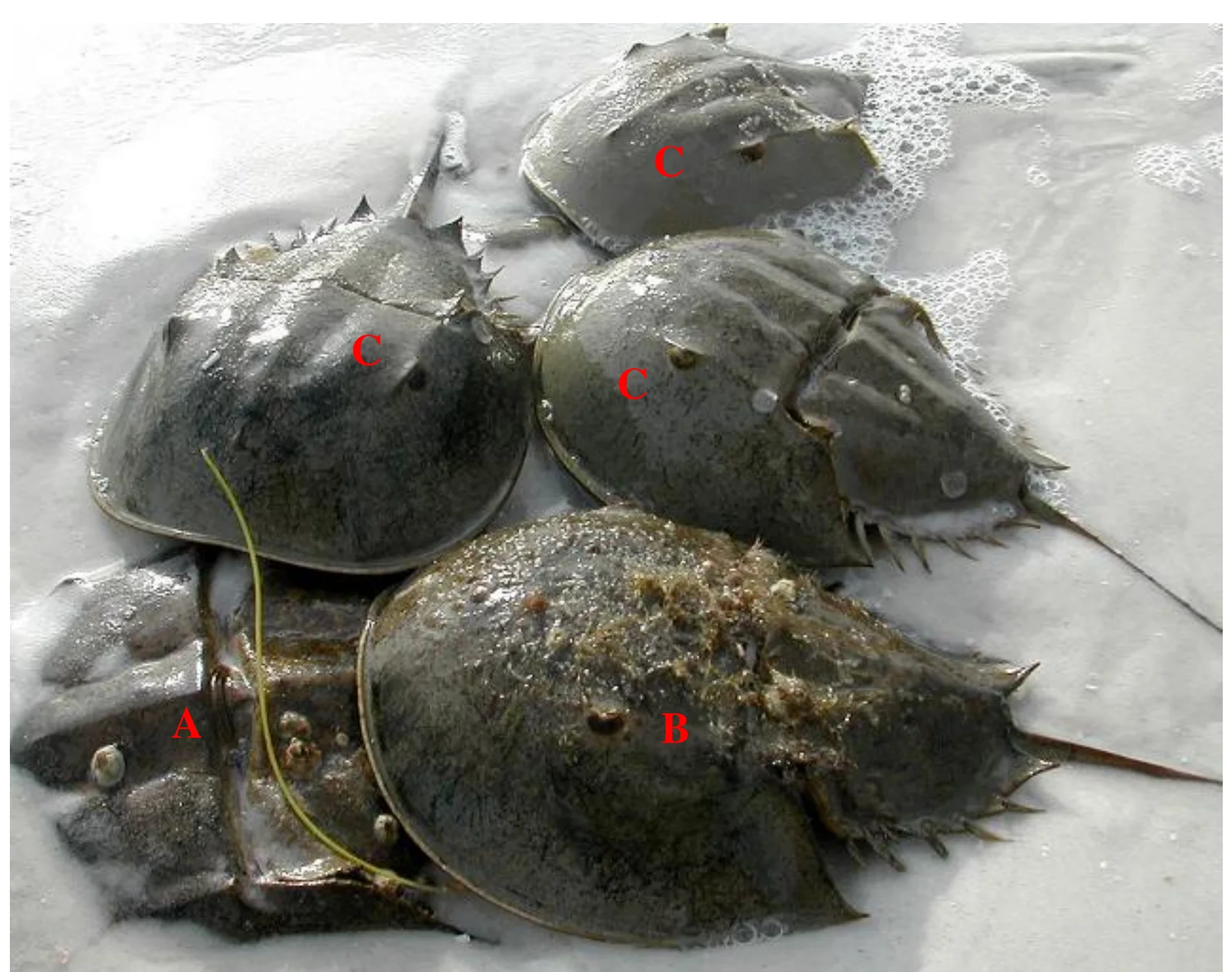
Figure 3. Female American horseshoe crab (A) with attached male (B) burying herself in the sand. Hopeful “satellite” males (C) can be seen around the mating pair, waiting for an opportunity to fertilise a portion of the eggs. Image credit: Andrew Vik, (2006).
1.3 Growth and development of early life stages
Larval hatching
Female horseshoe crabs choose nesting sites at the mid- to upper-intertidal zone of sandy beaches. This is thought to provide protection for developing eggs from subtidal aquatic predators (Botton et al., 2010). Furthermore, deposition of eggs below the sediment surface reduces exposure to environmental conditions such as wave action, temperature fluctuations, and variation in osmotic concentration (Botton et al., 2010).
Post-embryonic development
Horseshoe crab larvae molt numerous times as they grow and undergo their first molt during the initial planktonic stage; typically, 28 days after hatching. They will molt a further 17 - 25 times before they reach their terminal molt at 7 – 11 years of age. (Botton et al., 2010; Carmichael, Rutecki, & Valiela, 2003; Walls et al., 2002). Based on laboratory experiments conducted by Sekiguchi et al., (1988) in Japan on both American (Limulus polyphemus) and Japanese (Tachypleus tridentatus) horseshoe crabs, it was determined that there is a one-step difference in the larval instar stage between males and females, with females reaching maturity after one more molt than males (e.g. males molt 17 times before maturity, and females 18 times).
Based on experimental data and observations of Sekiguchi et al., (1988), ideal post-embryonic development of L. polyphemus is characterised by five molts during Year 0 (after hatching), three molts during Year 1, twice by Year 2, and once in Year 3. By the fourth year they have become 12 instar juveniles and will continue to molt at a rate of once per year until they reach sexual maturity in the 9th year for males and 10th year for females (Table 1).
Trilobite larvae and first- to third-year juvenile (instar 1 to 10) nursery habitats are typically characterised as shallow, nearshore waters, often on mudflats near the adult spawning beach (Figure 4) (Shuster & Sekiguchi, 2009; Cheng, Chabot, & Watson, 2015). Subsequent stages (instars 11 onwards) migrate further from the shoreline into deeper waters. For example, trawls from a survey conducted by Shuster & Sekiguchi (2009), found instar 10 juveniles to typically inhabit depths from about 1 – 7 m, instar 12 juveniles from about 4 – 8 m and instar 14 juveniles from about 6 – 8.5 m. Adults and late stage juveniles (from instar 14+) can be found throughout this range, however are most abundant in deeper waters on the continental shelf at depths of < 30 m (Carmichael et al., 2003).
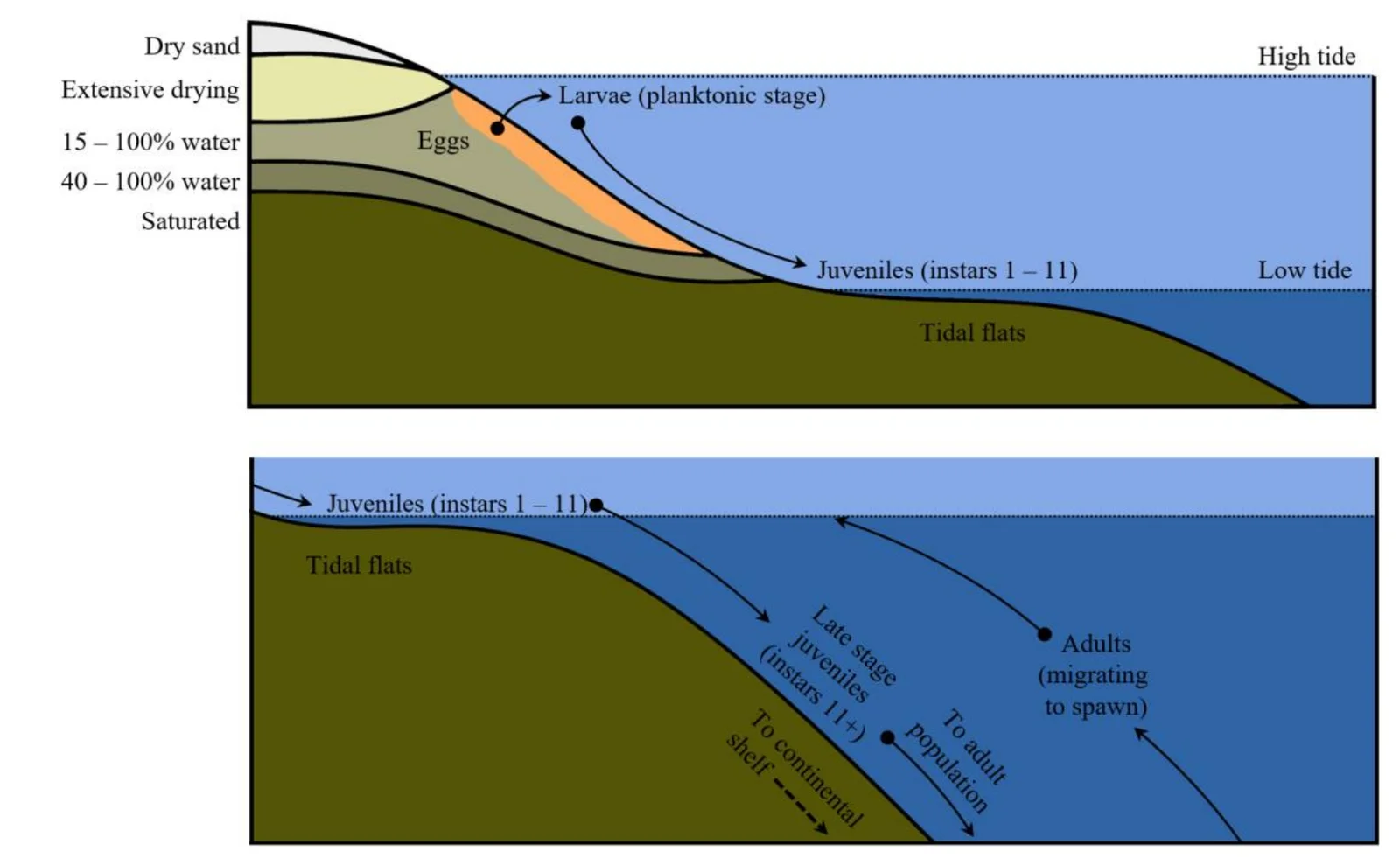
Figure 4. Diagram depicting life history of American horseshoe crab juveniles. Modified and adapted from ERDG, (2009).
Juvenile growth and mortality
Juvenile growth rates of Limulus polyphemus were calculated by Carmichael et al., (2003) and are summarised in Table 1. They found the growth rate of juveniles was significantly faster than that of adults, and the growth rate of both male and female adults slows as the crabs age.
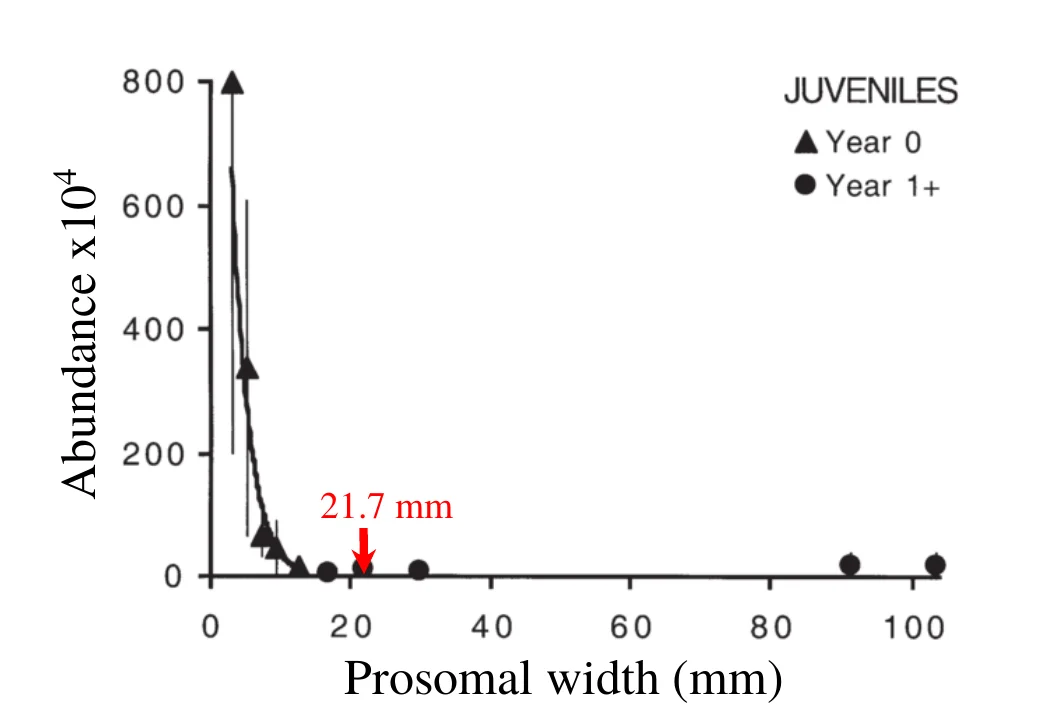
Figure 5. Change in abundance (x10⁴) of juvenile as reported by Carmichael., et al (2003).
From the same study, juvenile horseshoe crab mortality was also calculated from the abundance data, and also summarised in Table 1 (Carmichael et al., 2003). They revealed mortality was highest during the first 5 instars (up to Year 0) and remained approximately constant after instar 7 (after prosomal width of 21.7 mm, Table 1 & Figure 5). Year 0 juvenile abundance decreased exponentially with increasing prosomal width; following a pattern common to most invertebrates (Wang & Haywood, 1999). Estimated juvenile mortality for each instar stage (up to instar 7) ranged from 0 – 80% (Table 1). Only 0.001% of viable eggs laid on the beach hatched and survived past instar 6, and approximately 78% of these (instar 7+) survived to adulthood. So out of 1 million eggs laid on the beach that hatch, roughly 10 survive past instar 6, and about 8 will make it to adulthood.
For example, another similar study conducted by Botton et al., (2003) calculated that for every 1 million 1st instar trilobites on the beach (post-hatching), 33 will survive to fourth instar stage by the end of their first summer (Year 0.2).
Table 1. Mean duration, age, growth rate, prosomal width and % mortality of Limulus polyphemus instars as reported by and adapted from Carmichael et al., (2003).
| Instar | Instar duration (d) | Age (yr) | Mean prosomal width (mm) | Growth rate (mm d⁻¹) | % Mortality (per instar) | % Mortality (cumulative) |
|---|---|---|---|---|---|---|
| 1 | 16.6 | 0.1 | 3.1 ± 0.2 | 0.17 ± 0.01 | 58 | – |
| 2 | 10.9 | 0.1 | 5.0 ± 0.3 | 0.17 ± 0.01 | 80 | 92 |
| 3 | 12.5 | 0.1 | 7.1 ± 0.4 | 0.18 ± 0.01 | 27 | 94 |
| 4 | 15.8 | 0.2 | 9.1 ± 0.4 | 0.17 ± 0.01 | 63 | 98 |
| 5 | 71.0 | 0.4 | 12.5 ± 0.7 | 0.10 ± 0.01 | 67 | 99 |
| 6 | 182.5 | 1.0 | 16.6 ± 0.9 | 0.05 ± 0.003 | – | – |
| → 7 | 121.7 | 1.3 | 21.7 ± 0.3 | 0.05 ± 0.001 | 36 | 99.6 |
| 8 | 121.7 | 1.6 | 29.6 ± 0.2 | 0.05 ± 0.001 | – | – |
| 9 | 182.5 | 2.1 | 40.9 ± 1.5 | 0.05 ± 0.002 | 0 | – |
| 10 | 182.5 | 2.6 | 49.2 ± 1.6 | 0.05 ± 0.002 | – | – |
| 11 | 365.0 | 3.6 | 62.6 ± 3.3 | 0.05 ± 0.003 | – | – |
| → 12 | 365.0 | 4.6 | 77.3 ± 4.2 | 0.05 ± 0.003 | – | – |
| 13 | 365.0 | 5.6 | 91.1 ± 3.3 | 0.04 ± 0.002 | – | – |
| 14 | 365.0 | 6.6 | 103.4 ± 4.4 | 0.04 ± 0.002 | – | – |
| 15 | 365.0 | 7.6 | 115.5 ± 3.6 | 0.04 ± 0.001 | – | – |
| 16 | 365.0 | 8.6 | 134.0 ± 3.3 | 0.04 ± 0.001 | – | – |
| 17 | 365.0 | 9.6 | 159.7 ± 5.1 | 0.04 ± 0.001 | – | – |
1.4 Commercial importance
During the 1960s American horseshoe crabs became commercially important for use as bait in the American eel (Anguilla rostrada) and whelk (commonly known as “conch”, Busycon spp) commercial fisheries. (Walls et al., 2002). In 1998, the recording of horseshoe crab landings across all Atlantic states was made mandatory. During this year, some 2.7 million crabs were harvested for use in the bait fishing industry compared to 729,100 in 2012 (ASMFC, 2013; Novitsky, 2015). Prior to the 1970s, small numbers of horseshoe crabs were used for biomedical research (since the early 1900s). Horseshoe crab blood is blue and contains a clotting agent called Limulus Amoebocyte Lysate (LAL) which allows the detection of pathogenic endotoxins in injectable drugs and implantable medical devices (Berkson & Shuster, 1999). During the 1970s, as the demand for LAL in the biomedical industry increased, large numbers of horseshoe crabs began to be harvested for bleeding to collect LAL. The Atlantic States Marine Fisheries Commission (ASMFC) reported 611,827 horseshoe crabs were caught and bled for this purpose in 2012 compared to the ~130,000 estimated by the FDA in 1989 (ASMFC, 2013; Berkson & Shuster, 1999). Populations of horseshoe crabs through all Atlantic states began to decline rapidly in the 1990s; primarily due to the bait fishery. The ASMFC imposed strict restrictions and quotas on the harvesting of horseshoe crabs for the bait fishery industry. However, these restrictions do not apply to crabs harvested for the biomedical industry as it is not necessary to kill the horseshoe crabs to bleed them, and bled crabs are either returned to the wild, or sold to fishers for use as bait. Crabs not returned to the wild (i.e. sold to fishers) are offset against the bait harvest quota (ASMFC, 2013; Novitsky, 2015).
Part 2 - Hatchery design
2.1 Introduction
In the past, horseshoe crab populations within US waters were thought to be limitless. For this reason, management plans were not thought to be necessary. During the 1990s, high demand and subsequent harvest of Limulus populations for both the biomedical and bait fishery industries caused a noticeable decline in many populations across the US. Since the implementation of stringent management plans such as harvest quotas and no-take zones, to this day, many horseshoe crab populations are stable or increasing (e.g. Delaware Bay), however this is not the case for all regions prompting interest in developing aquaculture methods to enhance at risk populations of this species
2.2 Location
Long Island Sound, an American tidal estuary of the Atlantic Ocean, located to the east of New York City, and to the south of the State of Connecticut (Figure 6), is a densely populated and highly urbanised region. Horseshoe crabs have been harvested here for the bait fishery industry for many decades (Beekey & Mattei, 2015). Despite the Fishery Management Plan for Limulus set by the ASMFC, populations on Long Island Sound continue to decline (Beekey & Mattei, 2015). For this reason, there is growing interest in developing aquaculture methods for rearing this species in captivity in this region.
Rearing horseshoe crabs to an advanced stage where they can be commercially utilised is currently not practical. Both the bait and biomedical industry require adult crabs. Considering the long time period (7+ years) required for horseshoe crabs to reach sexual maturity, the costs of rearing individuals to this stage would be unrealistic. The best use of aquaculture methods may be to enhance the survival of this species during its most vulnerable stages (Landau, Jones, Zarnoch, & Botton, 2015).
During 2013, some 89,000 adult horseshoe crabs were harvested in the Long Island Sound region (Beekey & Mattei, 2015). The purpose of the second part of this report is to design a hatchery and post-larval grow-out system aimed to significantly enhance the Long Island Sound horseshoe crab population. Whilst aquaculture methods for Limulus currently exist, most have been small-scale research-based projects or studies (summarised in Table 2). This facility aims to generate enough horseshoe crab larvae to offset some of the 89,000 adults harvested each year in the Long Island Sound region. The design will take relevant aspects from each of the studies listed in Table 2 to tailor a facility suitable for this purpose.
The facility is located on Cove Island, just outside of the city of Stamford, Connecticut State. This location was chosen for its easy access to seawater and nearby horseshoe crab spawning sites (Figure 6).
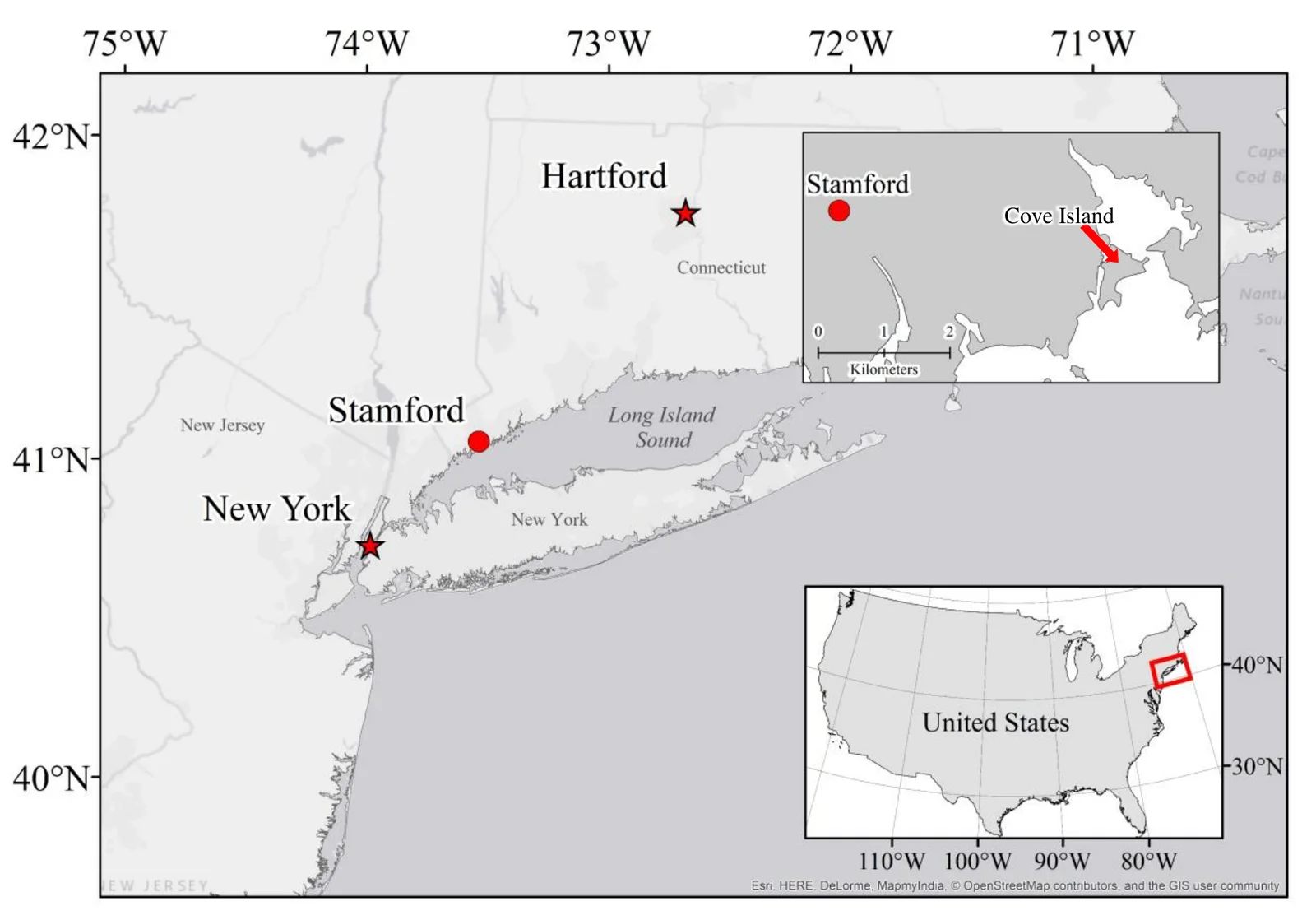
Figure 6. Long Island Sound. The horseshoe crab hatching facility (red arrow) is located on Cove Island, just outside of Stamford City.
Table 2. Previous trials on American horseshoe crab (Limulus polyphemus) rearing in captivity. Only studies that included a hatching and post grow-out system were included.
| Author | Water type | Temp (°C) | Salinity (ppt) | Hatching container | Hatching density (per container) | Hatching flow rate (L/min) | Grow-out container | Grow-out flow rate (L/min) | Hatching period (days) | Food | Reared to instar | Hatching success |
|---|---|---|---|---|---|---|---|---|---|---|---|---|
| Landau et al., (2015) | Recirculated seawater, sand filtered, UV sterilised | 23 – 28 | 28 – 31 | 6 L McDonald jar | 400 – 4000 | 4 – 12 | 70 L | 4 | 21 | Artemia and raw seawater | 4 | 80% |
| Schreibman & Zarnoch (2009) | Filtered tap water enriched with artificial salts | 20 – 25 | 27 – 33 | 6 L McDonald jar | 300 – 500 | 4 | 320 L trough | 1.5 – 2.0 | Up to 31 | Artemia and chopped clam | 15 | >75% |
| Sekiguchi et al., (1988) | Seawater recycled daily | 30 – 35 | 20 – 35 | 85 ml Glass bowl | 20 | – | 9 L container | – | 14 | Artemia and chopped earthworms | 2 – 14 | – |
2.3 Methods
Egg collection
The Cove Island Hatching Facility annual production schedule is summarised in Figure 7. Horseshoe crab culture methods described in a trial by Schreibman & Zarnoch, (2009) suggested that, for large-scale commercial operations, eggs should be collected from beaches during spawning season.
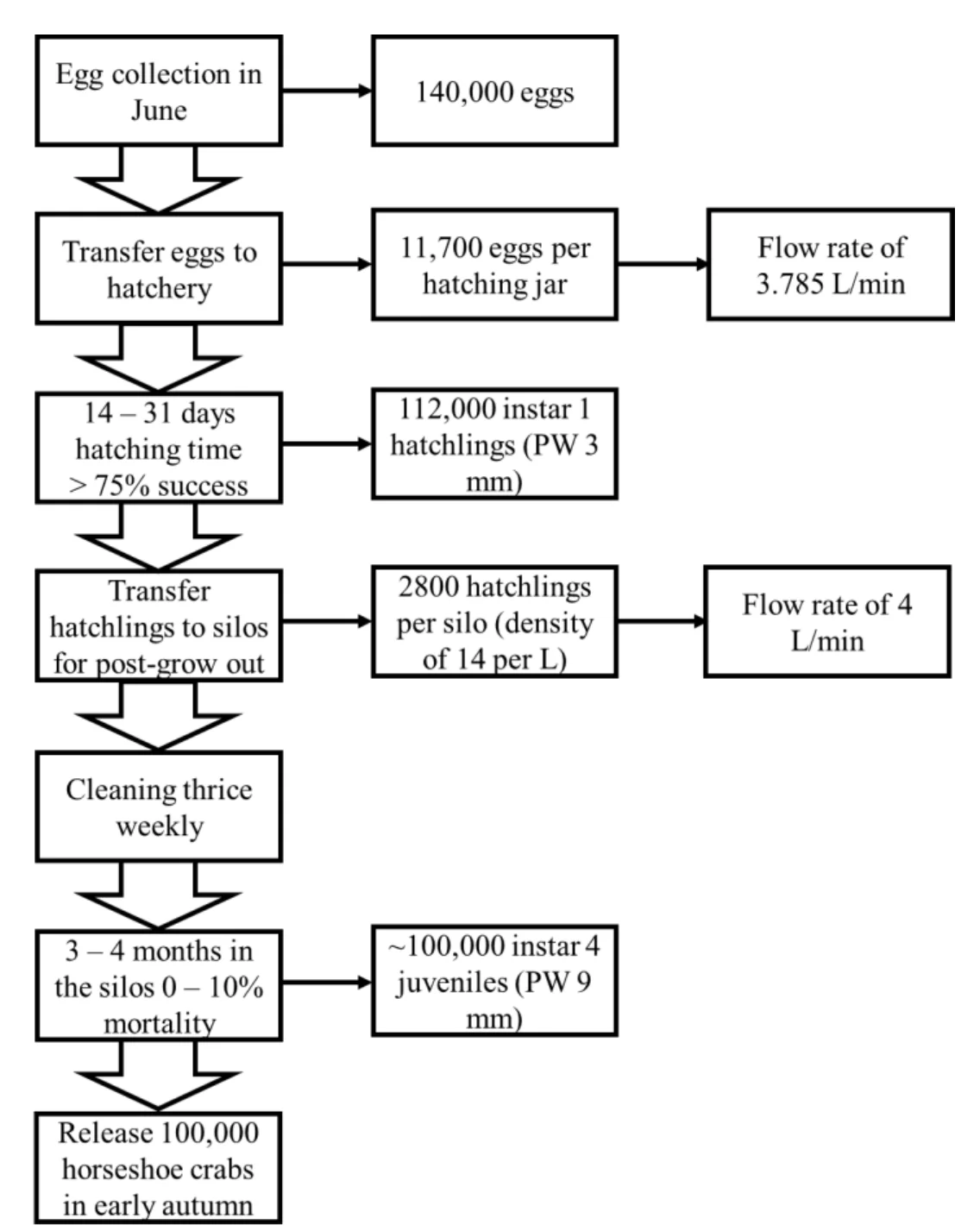
Figure 7. Annual horseshoe crab production schedule at Cove Island Facility. PW = prosomal width.
Eggs are primarily collected at spawning sites around Cove Island, however other locations around Long Island Sound can also be used to source eggs. During a spawning event (at night, typically during late-spring to early-summer), female nest sites should be marked on the beach. Two hours later, marked sites should be excavated to obtain the now fertilised eggs. Each clutch contains approximately 4000 eggs. For the hatchery, 140,000 eggs are required, therefore, approximately 35 clutches need to be taken. Eggs are taken back to the facility and washed.
Egg hatching system
The egg hatching system utilises commercially available McDonald-type hatching jars typically used for the hatching of trout eggs (Figure 8). Each jar is 45.7 cm tall with a diameter of 15.8 cm, holds 6 litres of water and can hold up to 100,000 trout eggs. Trout eggs range in size from 3.5 – 4.5 mm diameter, and horseshoe crab eggs prior to hatching have an average diameter of 3.6 mm (Landau et al., 2015). Water enters the jar from the top and flows to the bottom via the central pipe (Figure 8). This creates a vertical flow from the bottom out through the top of the jar. A minimum flow rate of 3.785 L/min is required to ensure the eggs are adequately rotated and to minimise chances of fungal infection (Landau et al., 2015), however this can be dependent on numerous factors such as number of eggs or water temperature. Water is delivered to the jars via a header tank and can be controlled using a faucet valve (Figure 9).
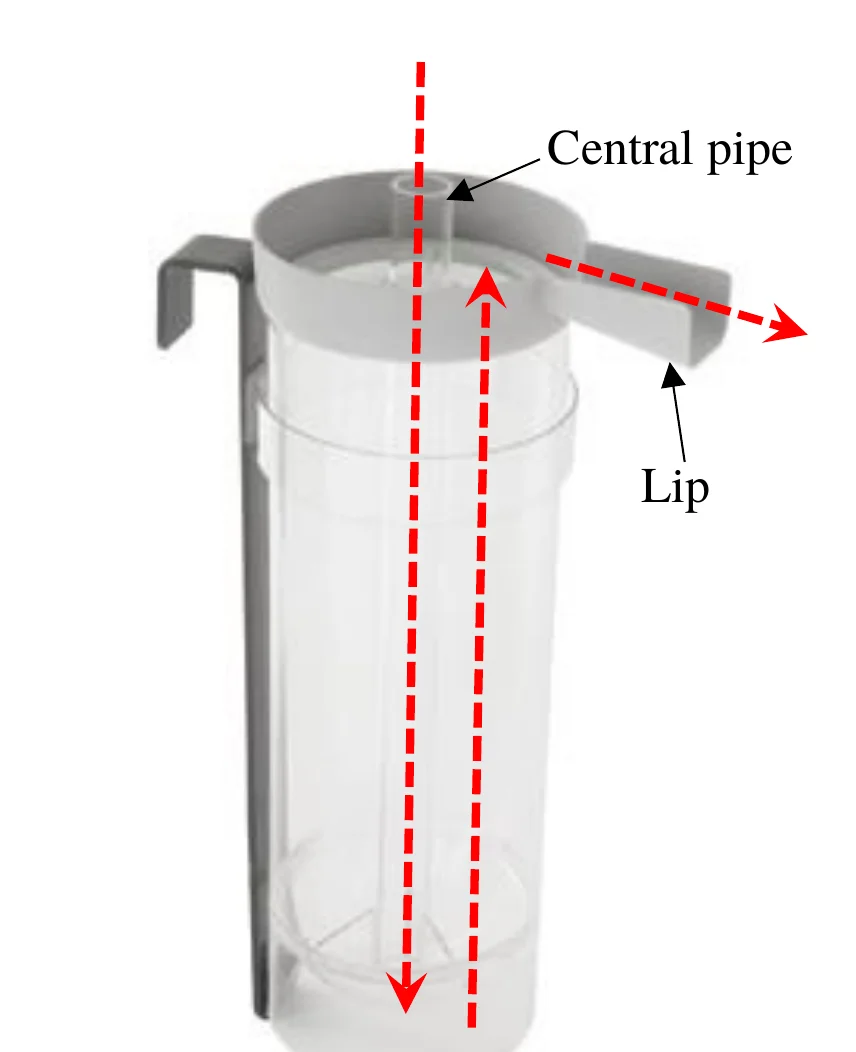
Figure 8. Commercially available McDonald-type hatching jar used for hatching fish eggs. Arrows show direction of water flow.
Water
Treated seawater obtained from Long Island Sound should be used. The facility uses a recirculating system. The raw seawater should be passed through a sand filter (grain size 0.45 – 0.55 mm) and then exposed to an ultra violet light to reduce microbial content. The treated water is then stored in the sump ready to be pumped to the header tank. The sump should be a large fiberglass container that can hold more than 1000 L of water. The water is pumped to the header tank, then flows by gravity through silicone tubes to the hatching jars (Figure 9 & 10).
Water from the sump and header tank should be drained daily. The system should be flushed with freshly treated seawater and allowed to refill. This process should take one trained person 30 minutes to complete (Landau et al., 2015).
Egg culture
Past attempts to culture horseshoe eggs in a hatchery were research-based trials, and only typically had about 20 – 4000 eggs per hatching container (Table 2). The commercially available McDonald-type hatching jars can hold as many as 100,000 trout eggs which are similar in size to horseshoe crab eggs. The facility at Cove Island has 12 hatching jars, therefore, with 140,000 eggs collected during a spawning event, each hatching jar will hold 11,700 eggs. As stated above, a minimum flow speed of 3.785 L/min is required for adequate egg rotation and minimising fungal infection, however this must be assessed and determined on site and adjusted accordingly. Online grey literature on the best aquaculture methods using McDonald-type hatching jars suggest not filling the jars with more than 40,000 eggs, and maintaining a water flow of between 2 - 3 L/min to gently rotate the eggs or “enough flow to suspend or fluidize the eggs” (Chappell, 2008). Theoretically, this facility could scale up operations if necessary. If the jars are filled to their maximum capacity of 100,000 eggs, assuming > 75% hatching success rate and 14 – 31 day hatching time (Table 2), then approximately six batches (of 1.2 million eggs) could be cultured between the spawning months of mid-May to mid-September, thus this facility has the potential to hatch 5.7 million horseshoe crab hatchlings per year.
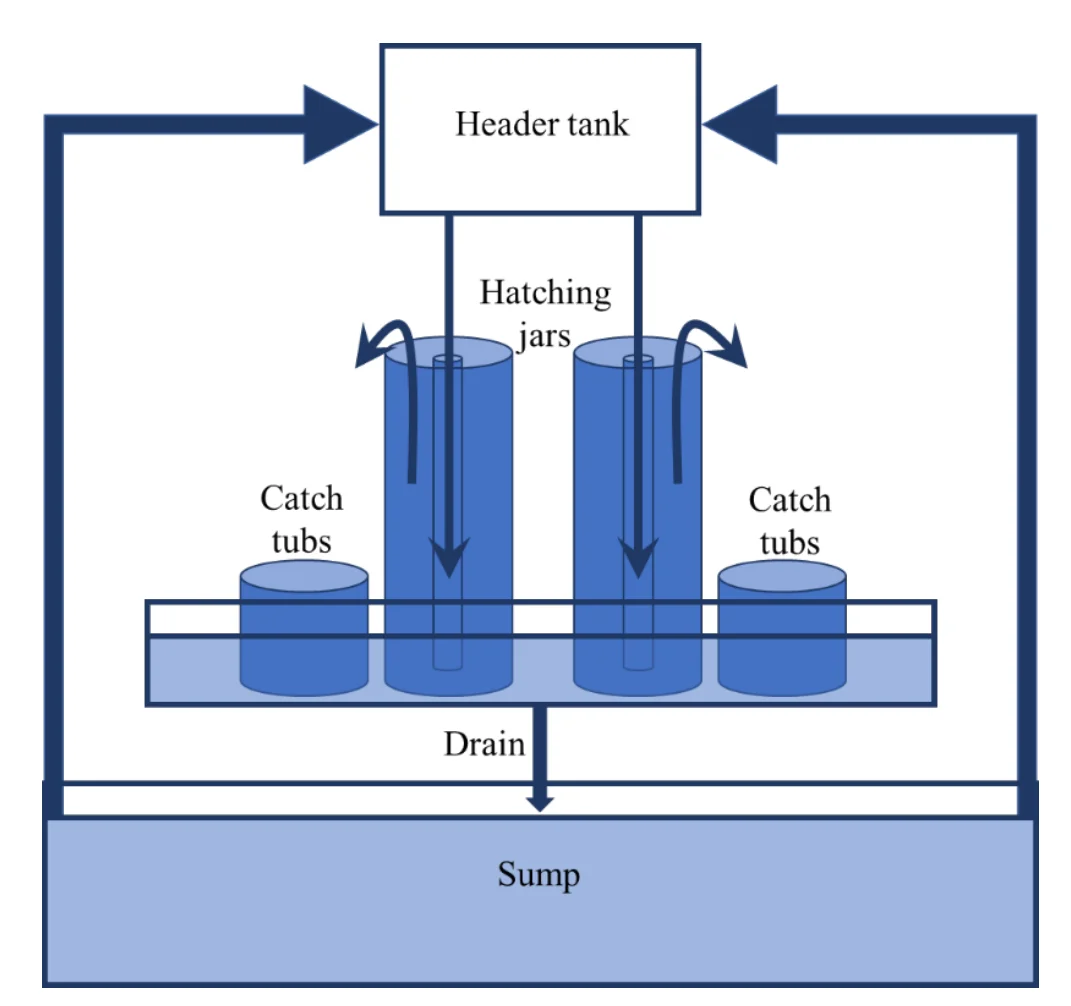
Figure 9. Schematic of egg hatching system. Arrows show direction of water flow. Adapted from Landau et al., (2015).
Catch tubs
Overflow from the McDonald-type hatching jars is directed to catch tubs by the lip at the top of the jar (Figures 8, 9 & 10). Although not shown in Figure 8, there is also a fine mesh barrier that fits over the top of the jar to prevent eggs and hatchlings from escaping. The catch tubs are simple plastic tubs that can hold > 2 L of water. They have holes drilled in the sides just above the bottom of the container and are lined with fine-mesh bags. The tubs sit in a large, shallow fiberglass trough with a drain fashioned at one end to allow the overflow water to pass to the sump below. When the embryos hatch (typically between 14 – 31 days), the flow speed of the McDonald jar should be reduced to allow the slightly denser unhatched eggs to sink, and the newly emerged hatchlings to float to the top of the jar. At this point, the fine-mesh barrier covering the McDonald jar can be removed to allow the hatchlings to pass into the catch tubs below. The hatchlings should then be deposited to the grow-out system in the next room.
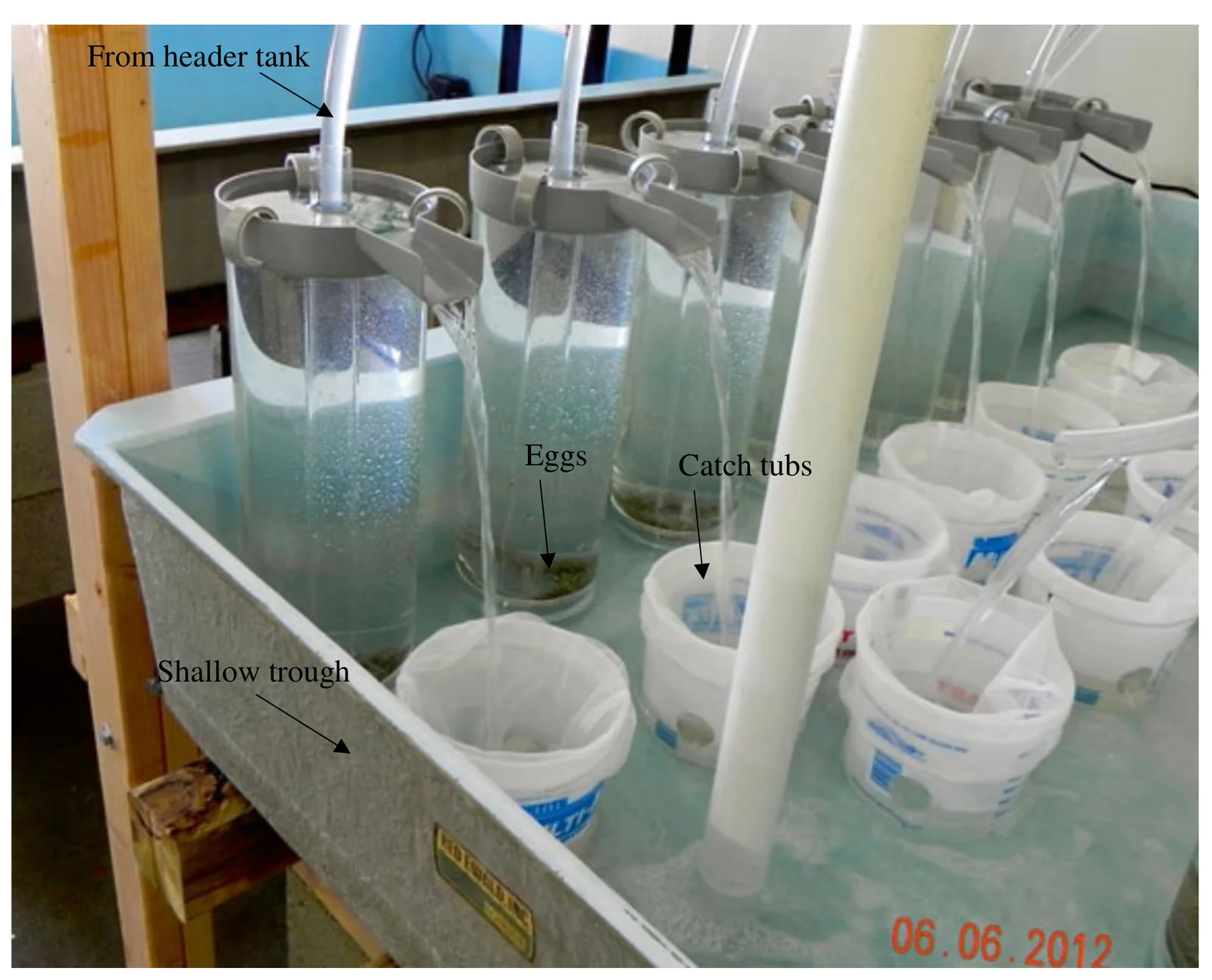
Figure 10. Hatching system showing McDonald-type hatching jars and overflow to catch tubs. The plastic rings on the hatching jars hold the fine-mesh screen in place. The catch tubs are lined with a fine-mesh bag. Hatching jars and catch tubs both sit in a shallow trough. Image credit: Landau et al., (2015).
Post-hatch grow-out system
The post-hatch grow-out system utilises technology primarily used in bivalve aquaculture systems. The newly hatched horseshoe crabs are transferred to downweller silos. The silos are modular, making it easier for staff to remove individual silos for cleaning or collecting horseshoe crabs without disrupting the other silos (Figure 11). The system is composed of one large trough containing five silos each with an air lift pump system to deliver seawater into the top of the silo.
Trough, silos and air lift pumps
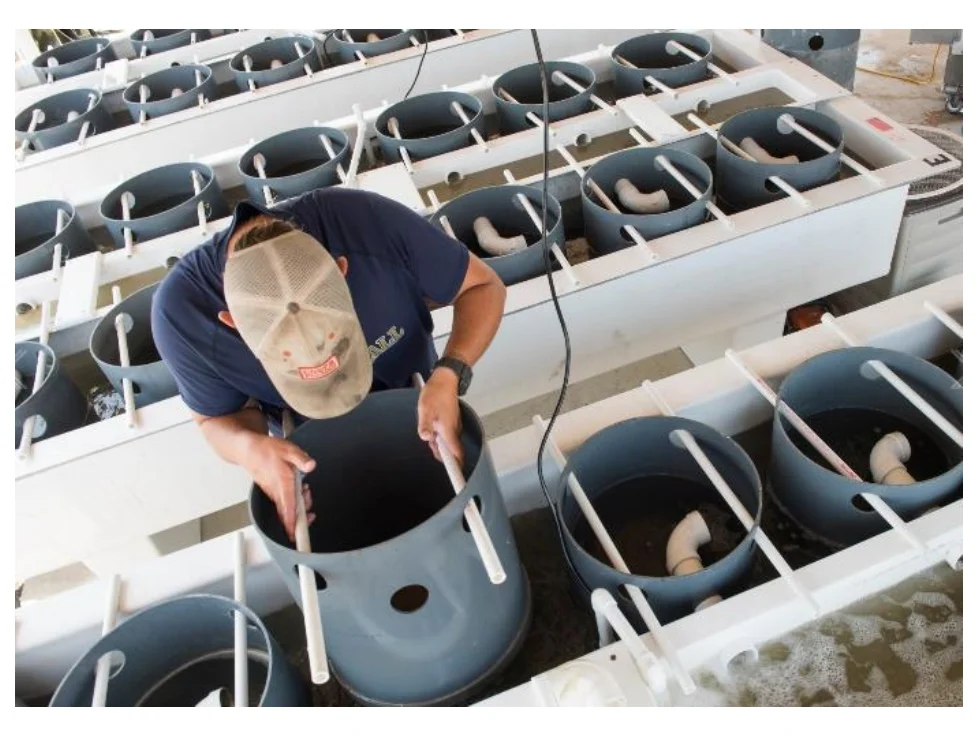
Figure 11. Example of modular downwelling recirculating grow-out system. Image credit: Jay Fleming, (2018)
The trough is rectangular, 91.1 cm wide, 80 cm deep and 480 cm long. The water level is kept constant at 60 cm from the bottom of the trough giving a final water volume of about 2,600 L (Figure 12).
Schreibman & Zarnoch, (2009) recommends using downweller silos for post-hatch cultivation of horseshoe crabs. Crabs cultured in this manner have the highest survival rate (Typically up to 100% if other environmental conditions are met). The silos are cylindrical, with a diameter of 80 cm and height of 60 cm. The silos are suspended in the trough about 20 cm clear from the bottom. The trough is filled to the 60 cm mark, after subtracting 20 cm for the gap between the bottom of the silo and the bottom of the trough, each silo will have a water depth of 40 cm for an average volume of 200 L per silo. The bottom of the silo is covered with a 180 μm mesh screen (Figure 12).
The air lifts, constructed from 2.5 cm PVC pipe trickle water from the trough into the top of the silo. Air pumps pump air into the PVC pipes (which are submerged in the trough); this decreases the density of the water in the pipe causing the water to flow upwards (against gravity) and out into the top of the silo. This flow of water into the top of the silo causes a downwelling current out through the mesh screen on the bottom and back into the trough where the cycle is started again. This creates a water flow of about 4 L/min, however should be adjusted so that the hatchlings are only minimally disturbed.
Stocking density and facility design
Landau et al., (2015) recommends a stocking density of 14 hatchlings per litre of water. They used smaller silos that hold 70 L of water with 1000 hatchlings per silo. The facility at Cove Island has scaled up this operation. Our silos will hold 200 L of water, with five silos per trough, and eight troughs giving a total of 40 active silos at Cove Island facility. The facility also has an additional two troughs with 10 silos that are inactive in case one of the troughs fails, or to allow for cleaning rotation. The silos were designed to be large enough to minimise space (80 smaller silos would take up double the space), but not too big as to ensure staff can easily lift them out of the trough.
With 140,000 eggs collected from the beach during spawning season, only about ~112,000 will successfully hatch. There will be a total of 80 silos, so each silo will hold about ~2800 hatchlings, and the hatchlings will remain in the silo for 3 – 4 months or until instar 4 (prosomal width 0.6 cm). After that, the instar 4 juveniles will be released back into the wild at the same beach the eggs were collected from. If the environmental conditions are met, mortality in the post grow-out system should be very low (between 0 and 10%), and roughly 100,000 instar 4 juveniles can be released into the wild from this facility. Survivorship of instar 4 juveniles to adulthood in the wild hasn’t been studied yet, however there is about 78% chance of survival for instar 7+ juveniles reaching sexual maturity.
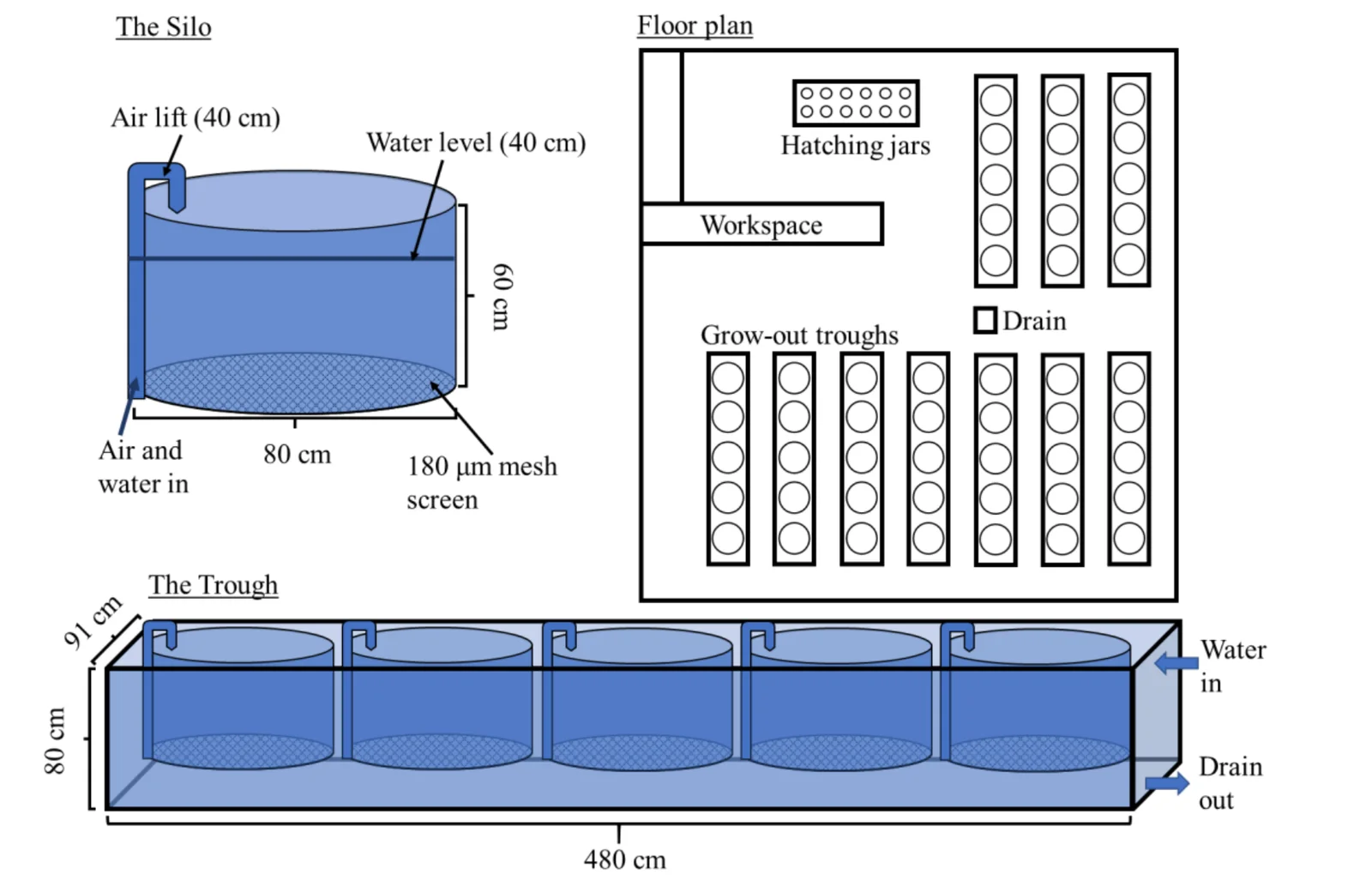
Figure 12. Schematic diagram of the silo, the trough and general floor plan. There are 12 hatching jars and 50 silos (10 extra for backup and cleaning rotation)
Water
Water for the post-hatching grow-out system is raw and passed through a crude 2 mm filter to remove larger particles. The water should be drained three times per week and the silos gently sprayed with seawater to remove any organic matter that has accumulated on the mesh and horseshoe crabs.
Feeding
Horseshoe crabs subsist on yolk reserves up until the first post-hatch molt. Schreibman & Zarnoch (2009) conducted their experiment in Brooklyn, NY, therefore didn’t have access to raw seawater (they used filtered tap water enhanced with artificial salts). They fed their crabs using Artemia brine shrimp nauplii (~450 μm). An experiment conducted by Landau et al,. (2015) comparing growth rates of horseshoe crabs fed on Artemia or raw 2 mm filtered seawater found that there was no significant difference between the two treatments (t = 0.230, P = 0.823). Therefore, the most cost-effective way to feed early stage horseshoe crab larvae is to use raw 2 mm filtered seawater. The horseshoe crab larvae gain enough sustenance from suspended biological material in the seawater.
2.4 Conclusion
This facility aims to replace some of the 89,000 horseshoe crabs harvested each year in Long Island Sound. The facility is capable of collecting and culturing 140,000 eggs (up to 1.2 million) per time and growing 112,000 juveniles to instar 4. Egg collection takes place during late-spring early-summer, and after 4 – 5 months, approximately 100,000 instar 4 juveniles can be released back into the wild. Carmichael et al., (2003) calculated survivourship of instar 7+ juveniles to adulthood to be about 78%, meaning 100,000 instar 4 juveniles will significantly enhance the population of the Long Island Sound horseshoe crab population. The population should be continuously monitored to determine how effective this strategy is. The Cove Island facility can easily be scaled up or down to meet the needs of the wild population.
References
ASMFC. (2013). Horseshoe Crab Stock Assessment Update. Arlington, Virginia.
Beekey, M. A., & Mattei, J. H. (2015). The Mismanagement of Limulus polyphemus in Long Island Sound, U.S.A.: What Are the Characteristics of a Population in Decline? In R. H. Carmichael, M. L. Botton, P. K. S. Shin, & S. G. Cheung (Eds.), Changing Global Perspectives on Horseshoe Crab Biology, Conservation and Management (pp. 433–461). Cham: Springer International Publishing. https://doi.org/10.1007/978-3-319-19542-1_25
Berkson, J., & Shuster, C. N. (1999). The Horseshoe Crab: The Battle for a True Multiple-use Resource. Fisheries Management, 24(11), 6–10. https://doi.org/10.1577/1548-8446(1999)024<0006:THCTBF>2.0.CO;2
Botton, M. L. (1995). Horseshoe crab. In Living Resources of the Delaware Estuary (pp. 51–57). Philadelphia, Pennsylvania: U.S. Environmental Protection Agency.
Botton, M. L., Loveland, R. E., & Tiwari, A. (2003). Distribution, abundance, and survivorship of young-of-the-year in a commercially exploited population of horseshoe crabs Limulus polyphemus. Marine Ecology Progress Series, 265, 175–184. https://doi.org/10.3354/meps265175
Botton, M. L., Tankersley, R. A., & Loveland, R. E. (2010). Developmental ecology of the American horseshoe crab Limulus polyphemus. Current Zoology, 56(5), 550–562.
Brockmann, J. H., Colson, T., & Potts, W. (1994). Sperm competition in horseshoe crabs (Limulus polyphemus). Behavioral Ecology and Sociobiology, 35(3), 153–160. https://doi.org/10.1007/s002650050082
Brockmann, J. H., & Penn, D. (1992). Male mating tactics in the horseshoe crab, Limulus polyphemus. Animal Behaviour, 44(4), 653–665. https://doi.org/10.1016/S0003-3472(05)80293-3
Carmichael, R. H., & Brush, E. (2012). Three decades of horseshoe crab rearing: A review of conditions for captive growth and survival. Reviews in Aquaculture, 4(1), 32–43. https://doi.org/10.1111/j.1753-5131.2012.01059.x
Carmichael, R. H., Rutecki, D., & Valiela, I. (2003). Abundance and population structure of the Atlantic horseshoe crab Limulus polyphemus in Pleasant Bay, Cape Cod. Mar Ecol Prog Ser, 246, 225–239. https://doi.org/10.3354/meps246225
Chappell, J. A. (2008). Incubating And Hatching Catfish Eggs In McDonald Jars. Retrieved from https://articles.extension.org/sites/default/files/w/1/13/Incubating_and_hatching_catfish_eggs_in_McDonald_Jars.pdf
Cheng, H., Chabot, C. C., & Watson, W. H. (2015). The Life History Cycle of Limulus polyphemus in the Great Bay Estuary, New Hampshire U.S.A. In R. H. Carmichael, M. L. Botton, P. K. S. Shin, & S. G. Cheung (Eds.), Changing Global Perspectives on Horseshoe Crab Biology, Conservation and Management (pp. 237–253). Cham: Springer International Publishing. https://doi.org/10.1007/978-3-319-19542-1_13
Ehlinger, G. S., & Tankersley, R. A. (2003). Larval hatching in the horseshoe crab, Limulus polyphemus: facilitation by environmental cues. Journal of Experimental Marine Biology and Ecology, 292(2), 199–212. https://doi.org/10.1016/S0022-0981(03)00180-1
Gaines, E. F., Carmichael, R. H., Grady, S. P., & Valiela, I. (2002). Stable Isotopic Evidence for Changing Nutritional Sources of Juvenile Horseshoe Crabs. The Biological Bulletin, 203(2), 228–230. https://doi.org/10.2307/1543412
Landau, B. J., Jones, D. R., Zarnoch, C. B., & Botton, M. L. (2015). Development of Aquaculture Methods to Enhance Horseshoe Crab Populations: An Example from Delaware Bay, U.S.A. In R. H. Carmichael, M. L. Botton, P. K. S. Shin, & S. G. Cheung (Eds.), Changing Global Perspectives on Horseshoe Crab Biology, Conservation and Management (pp. 513–536). Cham: Springer International Publishing. https://doi.org/10.1007/978-3-319-19542-1_30
Novitsky, T. J. (2015). Biomedical Implications for Managing the Limulus polyphemus Harvest Along the Northeast Coast of the United States. In R. H. Carmichael, M. L. Botton, P. K. S. Shin, & S. G. Cheung (Eds.), Changing Global Perspectives on Horseshoe Crab Biology, Conservation and Management (pp. 483–500). Cham: Springer International Publishing. https://doi.org/10.1007/978-3-319-19542-1_28
Schreibman, M. P., & Zarnoch, C. B. (2009). Aquaculture Methods and Early Growth of Juvenile Horseshoe Crabs (Limulus polyphemus). In J. T. Tanacredi, M. L. Botton, & D. Smith (Eds.), Biology and Conservation of Horseshoe Crabs (pp. 501–511). Boston, MA: Springer US. https://doi.org/10.1007/978-0-387-89959-6_31
Sekiguchi, K., Seshimo, H., & Sugita, H. (1988). Post-Embryonic development of the horseshoe crab. Biological Bulletin, 174(3), 337–345. https://doi.org/10.2307/1541959
Shuster, C. N., & Babcock, L. (2014). Xiphosurida. In AccessScience. McGraw-Hill Education. https://doi.org/https://doi.org/10.1036/1097-8542.752100
Shuster, C. N., & Botton, M. L. (1985). A contribution to the population biology of horseshoe crabs, Limulus polyphemus (L.), in Delaware Bay. Estuaries, 8(4), 363–372. https://doi.org/10.1007/BF02803963
Shuster, C. N., & Sekiguchi, K. (2009). Basic Habitat Requirements of the Extant Species of Horseshoe Crabs (Limulacea). In J. Tanacredi, M. Botton, & D. Smith (Eds.), Biology and Conservation of Horseshoe Crabs (pp. 115–129). New York, USA: Springer International Publishing. https://doi.org/10.1007/978-0-387-89959-6_7
Smith, D. R., Millard, M. J., & Carmichael, R. H. (2009). Comparative Status and Assessment of Limulus polyphemus with Emphasis on the New England and Delaware Bay Populations. In J. T. Tanacredi, M. L. Botton, & D. Smith (Eds.), Biology and Conservation of Horseshoe Crabs (pp. 361–386). Boston, MA: Springer US. https://doi.org/10.1007/978-0-387-89959-6_23
Smith, D. R., Pooler, P. S., Swan, B. L., Michels, S. F., Hall, W. R., Himchak, P. J., & Millard, M. J. (2002). Spatial and temporal distribution of horseshoe crab (Limulus polyphemus) spawning in Delaware Bay: Implications for monitoring. Estuaries, 25(1), 115–125. https://doi.org/10.1007/BF02696055
Smith, S. A., & Berkson, J. (2005). Laboratory culture and maintenance of the horseshoe crab (Limulus polyphemus). Lab Animal, 34(7), 27–34. https://doi.org/10.1038/laban0705-27
Walls, E. A., Berkson, J., & Smith, S. A. (2002). The Horseshoe Crab, Limulus polyphemus : 200 Million Years of Existence, 100 Years of Study. Reviews in Fisheries Science, 10(1), 39–73. https://doi.org/10.1080/20026491051677
Wang, Y.-G., & Haywood, M. D. E. (1999). Size-dependent natural mortality of juvenile banana prawns Penaeus merguiensis in the Gulf of Carpentaria, Australia. Marine and Freshwater Research, 50, 313–317. https://doi.org/https://doi.org/10.1071/MF97229